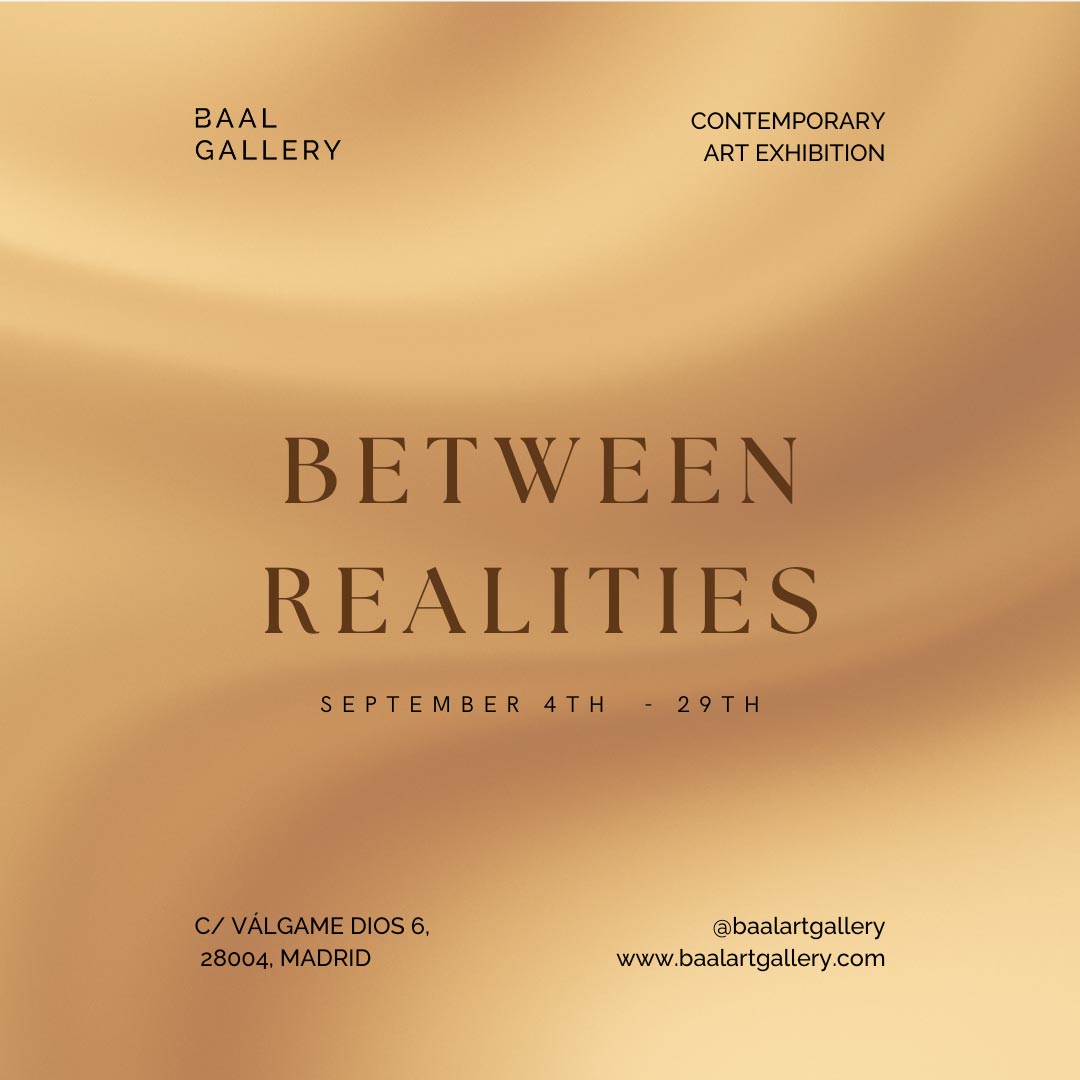
This upcoming exhibition brings together a diverse selection of artists whose practices span a wide range of mediums, including painting, sculpture, mixed media, and experimental approaches. By presenting multiple artistic voices within a single dialogue, “Between Realities” encourages visitors to reflect on the ways in which perception, imagination, and reality intersect, overlap, and challenge one another.
The participating artists—Tophoon, Su Weng, Tina Reichel, Jose Luis Hanhausen, Pilar Pedraza, Ann Christinn, Harumi Yukawa, Maximiliano, Gabriela Simionato, and Arco Bruinenberg—offer a dynamic spectrum of approaches, each contributing to a nuanced exploration of artistic practice. While the works differ in style and medium, together they highlight the shared ambition of art: to provoke thought, spark curiosity, and invite dialogue between the artwork and its audience.
“Between Realities” aims to provide a space where visitors can engage freely with each work, encouraging personal interpretation and reflection. The exhibition underscores BAAL Gallery’s ongoing commitment to supporting emerging and established artists alike, offering a platform for experimentation, critical engagement, and cross-cultural exchange.
Through this exhibition, BAAL Gallery continues to position itself as a vital space for art, fostering connections between artists, audiences, and ideas in the ever-evolving landscape of visual culture. “Between Realities” opens on September 4, 2025, and will be on view for a limited time, inviting all to explore, question, and immerse themselves in the possibilities that arise when different artistic realities meet.
Each artist, through diverse visual languages, opens a space of encounter where the visible becomes a bridge to the inner self.
For Arco Bruinenberg, abstraction is a language of its own. His canvases, built in layers of color, light, and texture, seek not to explain but to feel. Inspired by the modernists and contemporary architecture, he transforms emotion into pictorial matter, inviting the viewer to discover their own narrative.
Ann Christin Brune articulates a dialogue with nature and the organic. Her works evoke primordial forces, where gestures become traces that connect the ancestral with the present, opening a symbolic space of transformation and vitality.
In Harumi Yukawa’s work, creation begins in silence. By fusing sumi ink and pigments, she constructs gradations that are more than tones — they are states of being. Her portraits suggest invisible presences, like threads of silk that weave together light and shadow, memory and emotion, awakening in the viewer something that already dwells within.
Tina Reichel unfolds painting as a field of energy. Self-taught and with an international presence, her intense and dynamic abstractions radiate vitality, transforming any space they inhabit. Her work does not merely express emotion — it embodies it.
Tophoon explores the boundaries between gestural painting, digital art, and experimentation. His chromatic contrasts, use of 3D printing, and incursions into digital pop create a hybrid language that oscillates between meditative contemplation and the pulse of popular culture.
In Pilar Pedraza’s painting, color is life. After leaving teaching to fully devote herself to art, her search remains constant: to understand nature through color and allow it to flood everything. Her works invite a sensitive experience of fullness.
Jose Luis Hanhausen (Joso), an emerging Mexican artist based in Madrid, left the world of football to embrace painting as a way of life. His work explores the complexities of human experience with a conceptual language rich in detail and emotion. On his canvases, the inner layers of consciousness connect with the beauty and chaos of everyday life, resulting in works that are deeply personal yet universal.
For Joaquín Maximiliano, his work unfolds through the exploration of gesture and color as forces that move between the intimate and the monumental. With a pictorial language of great physicality, he opens a territory of tensions and resonances that link the emotional with the material.
Finally, Su Weng Choi develops a visual practice that bridges tradition and modernity, blending the pictorial with the material. Her pieces balance layers of formal delicacy with a powerful chromatic energy that underscores both the fragility and strength of the human condition.
Together, these artists form a plural territory where matter, color, and experimentation become gateways to realities that cannot be named but can be felt. In Between Realities, the visible opens up to the invisible, and each work becomes a threshold toward what connects and transforms us.